
Can Stress Affect Your Sexual Wellness? Expert Decodes

Indian Women’s Cricket: The Untold Journey from Obscurity to Stardom
September 28, 2026
Signature Global Lines Up 170 Lakh Sq Ft Project Pipeline in Gurugram
October 2, 2026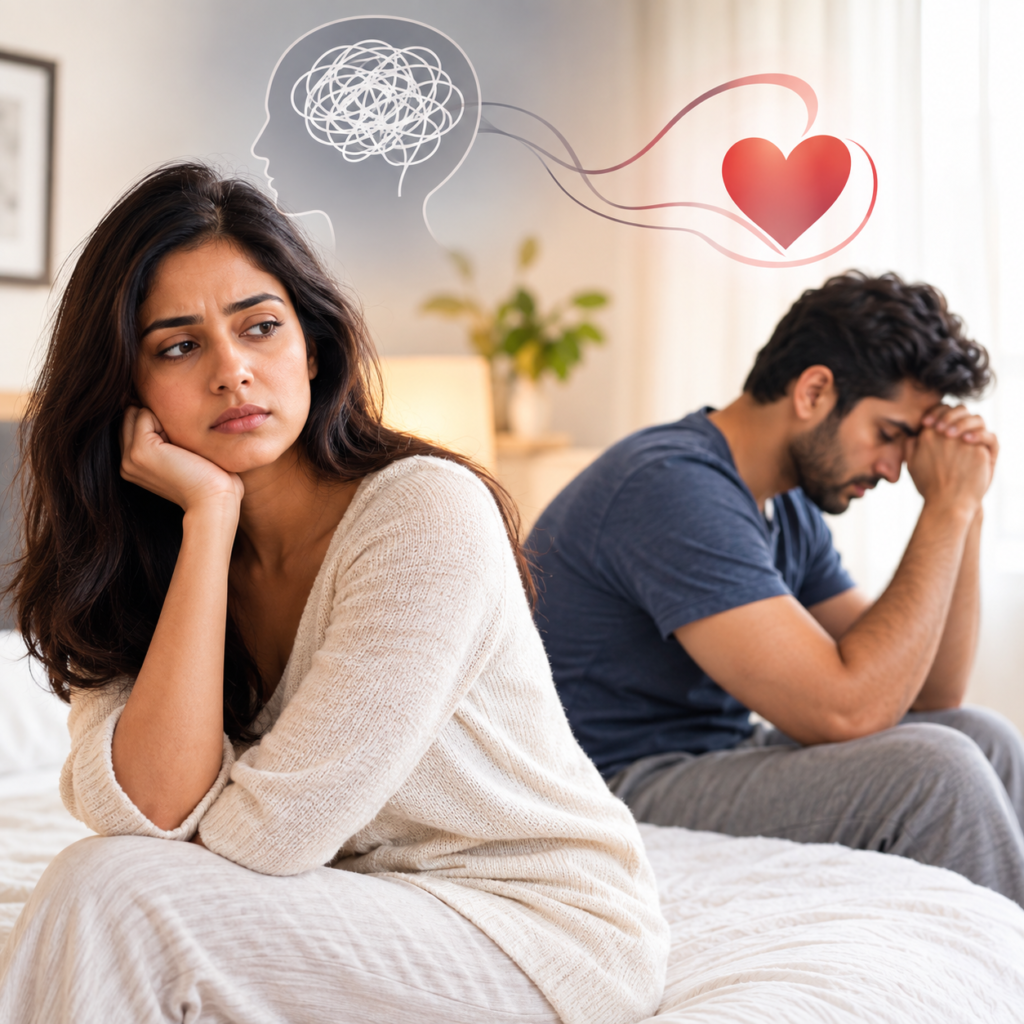
From financial pressures to work schedules, fertility-related anxiety, and relationship concerns, consistent stress can affect sleep and mood. Dr Gauri Agarwal, Founder, Seeds of Innocence IVF, Home IVF, and Genestring Labs explains how nervous systems and hormones are interconnected with reproductive and sexual wellbeing.

Dr Gauri Agarwal, Founder, Seeds of Innocence IVF, Home IVF, and Genestring Labs
It is almost impossible to avoid stress in the modern lifestyle. Constant pressure to ensure productivity, relationship concerns, family expectations, financial responsibilities, and deadlines can snatch your time for the body and mind to recover.
It leads to loss of concentration, frequent headteachers, irritability, fatigue and disturbed sleep. But there is another side that is affected by stress and that is sexual wellness.
WHO defines sexual health as a state of physical, social, mental, and emotional wellbeing interaction to sexuality. Sexual health is very important for overall health, wellbeing and relationships. Hence, it makes it an important part of the conversation.
Stats are the Evidences
As per WHO, 1 in 6 people (17.5%) of the adult population globally experience infertility during their lifetime. It can arise from female as well as male factors and when the cause is unknown, we call it unexplained fertility.
However, stress is not a standalone cause for infertility but it is indeed one of the important factors that contributes to the situation. The research also explains that sexual wellbeing and psychological wellbeing are interconnected. Chronic Stress can lead to:
1. It Can Make Intimacy Harder
The brain is the starting point of sexual wellbeing. When there is persistent emotional exhaustion, financial concerns, unfinished work, and constant worries, the mind can go to such issues from time to time even during moments of connection and relaxation. It is known as cognitive distraction.
Researches suggest that the women with higher chronic stress had greater cognitive distraction, higher cortisol levels, and lower genital arousal.
It might cause couples to think that it is because of emotional connection but the reason might simply be that the mind is struggling to switch off.
2. Stress Activates Body’s Survival Mode
The brain has the habit of activating the body’s stress-response pathways in case of threat. It helps in dealing with challenges.
But when the problem remains consistent, the associated hormonal changes and chronic stress may influence vascular function, testosterone, cortisol, and nervous system. The acute psychological stress can affect sexual function and testosterone temporarily but chronic psychological stress can lead to long-term endocrine dysregulation.
3. Sexual Function Can Be Compromised in Men & Women
Erectile dysfunction is not always physical. Stress can also cause erectile dysfunctioning in men. The US National Institute of Diabetes and Digestive and Kidney Diseases reveals that 40 percent of the total men at the age of around 40 are affected with erectile dysfunctioning and this stat keeps increasing with age. Anxiety and stress are among the emotional and psychological factors that contribute to certain medical conditions, erectile dysfunctioning and many other lifestyle factors. A man may experience a temporary change in sexual function during an intensely stressful period. He may then become concerned that it will happen again. That concern can create additional anxiety. And suddenly, the original stress has been joined by worry about sexual performance, creating another layer of psychological pressure. Then, this can become a cycle where stress leads to change in sexual responses, then worries, and further difficulties with sexual responses.
Sexual health and mental health of men and women are also interrelated to each other. There are studies that found evidence of a bidirectional association between depression and sexual dysfunction. Lack of sleep and sedentary lifestyle are the other reasons that keeps making the condition worse. Considering all factors, it can also increase the risk of infertility.
How to Get Rid of Chronic Stress?
There is not a single solution to cure stress. But there are certain steps that can be taken to control and win over your stress:
1.Identify the Cause: Recognize what’s bothering you. Recognizing the cause of the problem is the very first step towards solving it. If you don’t know it, you can’t cure it. Write down your cause in a journal. Try to figure out if the problem is that big to affect you to this extent or not.
2. Take Proper Sleep: Poor sleep is the reason behind many emotional and psychological factors. It can not only deteriorate your mental health but it can also destroy your physical health in the longer run. Also, it gives strength to recover from your daily stress.
3. Be Physically Active: A consistent physical activity supports mental as well as cardiovascular health that is also a very important part of managing stress.
4. Seek Professional Advice Immediately: Don’t dismiss stress as a part of your lives. If it’s raising issues with poor sexual responses, infertility, or pain, seek professional advice immediately.
The bottom line is sexual wellness is not an embarssing conversation. It is an important health issue that should not be ignored. It affects your physical as well as mental health while the treatment starts with identifying the cause and treating it rightly.