
From Data to Decisions: How AI Is Changing the Future of IVF and Genetic Diagnosis
Manipal Hospitals Plans 500 Bed Hospital in Gurugram, Expanding Delhi-NCR Healthcare Presence
November 5, 2026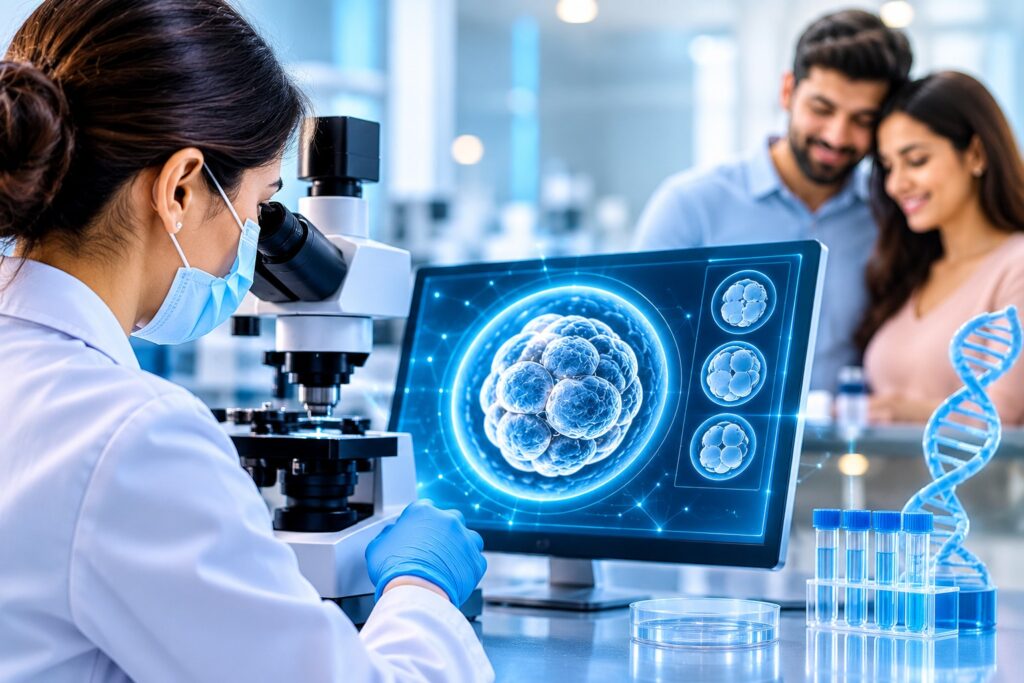
By Dr Gauri Agarwal, Founder, Seeds of Innocence IVF, Home IVF and Genestring Labs

When a couple has spent months trying to conceive a baby, they need quick and clear answers while visiting a fertility specialist. Their generic investigations, ultrasound findings, hormone reports and medical history hides many clues about fertility. It is complex to bring all of those findings and information together and make it easily accessible for the couples.
This is where AI comes into the picture. Artificial intelligence is now becoming a helping hand in reproductive medicine by assisting healthcare experts streamlining diagnostic processes, identifying important processes, and analysing a large chunk of medical data. As per WHO, 1 in 6 people experiences infertility during their lifetime across the globe. Hence, it becomes important to make informed treatment decisions, a timely intervention, and an accurate diagnosis using certain tools,
Helping Doctors See the Bigger Picture
Infertility is caused by certain factors including multiple genetic conditions, sperm-related factors, ovulation disorders, and hormonal imbalances. Doctors can not get dependent on a single test and a proper analysis requires examining multiple reports. Artificial intelligence can help bring together information from imaging, laboratory investigations, and medical records. There are systems that are used to recognize certain patterns that assist doctors in assessing ovarian response and understand every unique patient profile.
For instance, if a person has already undergone an IVF cycle, it becomes easier for clinicians to evaluate how a patient previously responded to fertility medications. Artificial intelligence assisted tools can help support this analysis but only healthcare experts should make treatment decisions based on a patient’s individual circumstances. A patient’s treatment should not be only based on the analysis given by AI tools.
From Embryo Assessment to Genetic Testing
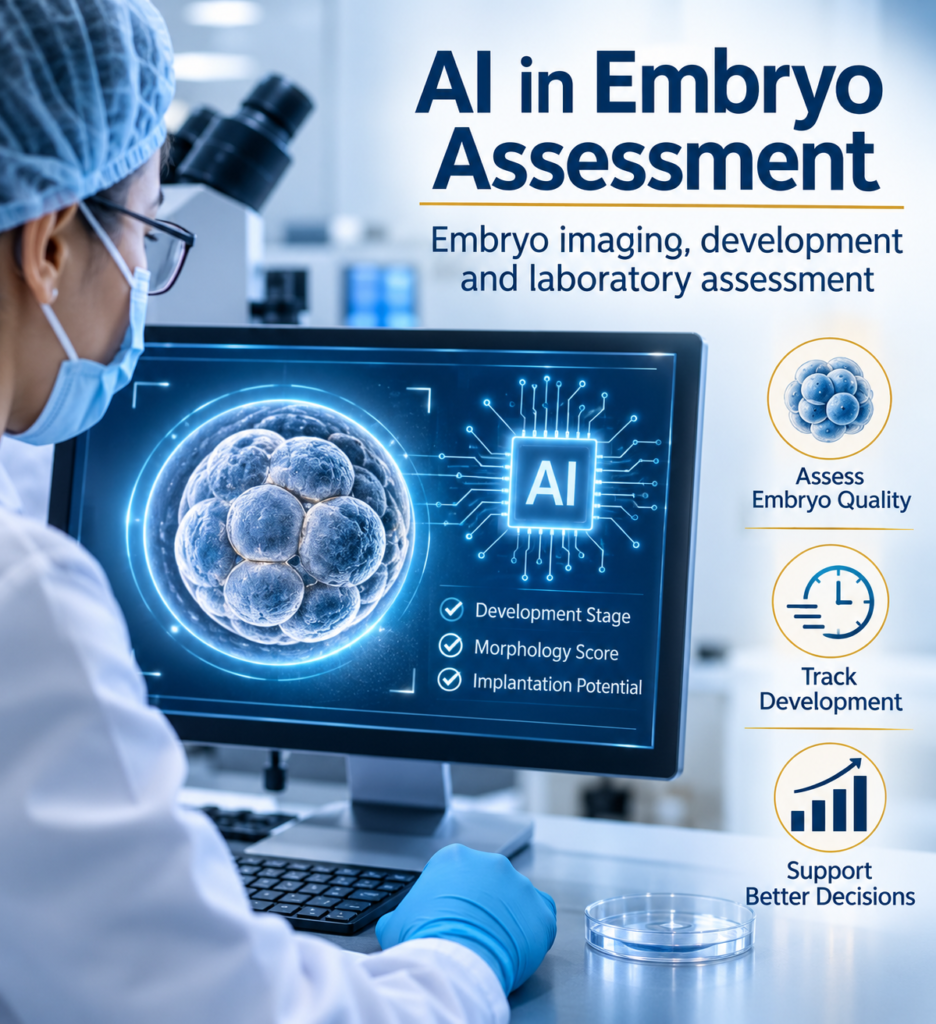
AI has now been helping in embryo assessment. Embryologists can examine embryos to determine which embryo is suitable to transfer and also evaluate their development. AI systems can analyse time-lapse recordings and embryo images to support consistent assessments and recognize developmental patterns. However, it doesn’t mean that an embryo’s appearance cannot guarantee a successful pregnancy. The effectiveness of AI-assisted selection continues to be studied, and experienced embryologists remain essential to the process.
There is also one more important part of reproductive medicine that can be seen through a microscope which is genetic diagnosis. There are various genetic tests that can recognize inherited conditions and chromosomal abnormalities based on clinical indications. These investigations can generate complex information that must be processed, checked, and interpreted carefully.
The role of advanced diagnostic laboratories becomes even more important at this stage. Even at Genestring labs, we use genetic testing to reflect a critical part of the fertility journey: helping clinicians accessing diagnostic information that can contribute to counselling and clinical assessment.
AI-assisted laboratories have the ability to handle complex databases and other computational tools such as information management, quality checks, and data analysis where appropriately validated systems are in place. Such applications can support more organised workflows and reduce repetitive manual work and hence, allowing laboratory professionals to concentrate on interpretation and accuracy.
Making the Journey More Efficient
An IVF journey involves much more than the procedure itself. Patients may undergo multiple investigations, consultations and follow-up appointments. Behind every result are laboratory processes involving sample identification, data recording, quality control and reporting.
Digital tools and automation can help organise these activities, reduce repetitive tasks and improve the traceability of information. In genetic diagnostics, where accuracy is essential, well-designed workflows can support consistency and help laboratory teams manage complex information more efficiently.
For patients and doctors, reliable results and clear communication are just as important as speed. Technology is valuable when it helps improve the quality and usability of information, not simply when it makes a process faster.
Why Can Technology Cannot Replace the Human Touch?
However, it is not wise to say that healthcare expertise can entirely depend upon artificial intelligence. Its accuracy depends upon the quality of the data on the basis of which solution performed and it can vary across different clinical settings and patient populations. However, an AI-generated prediction is still not a guarantee for pregnancy, implantation or a successful birth.
A fertility treatment also involves difficult decisions, personal choices, and emotions that can never be reduced to data alone. Patients need doctors who can guide them with empathy, acknowledge uncertainty, and explain their other choices.
That’s why the future of reproductive medicine should combine clinical expertise with technological innovation and responsible decision making.
A More Informed Future for Fertility Care
AI is a standpoint where it is changing how laboratories manage complex information, how embryologists assess development, and how fertility experts approach diagnosis. Its greatest promise lies in assisting healthcare experts deliver more individualised care and make more sense of complexity in certain situations.
It is important to understand that the journey from an initial consultation to a genetic test result or an IVF treatment plan involves many decisions supported by information from different sources. When clinical expertise, reliable, reliable laboratory processes, and advanced diagnostics work together, the information can become more useful.
For me, I personally don’t think that AI can be used to solve every particular fertility challenge but it surely can help doctors understand each case better and help laboratories work more efficiently that gives patients a stronger foundation for informed decisions. Because behind every technological advancement, test, and report, there is a person waiting. And that’s where innovation makes a big difference.