Indian Women’s Cricket: The Untold Journey from Obscurity to Stardom

‘National Crush’ of Yesterday under ‘National Scrutiny’ today
September 18, 2026
Can Stress Affect Your Sexual Wellness? Expert Decodes
October 2, 2026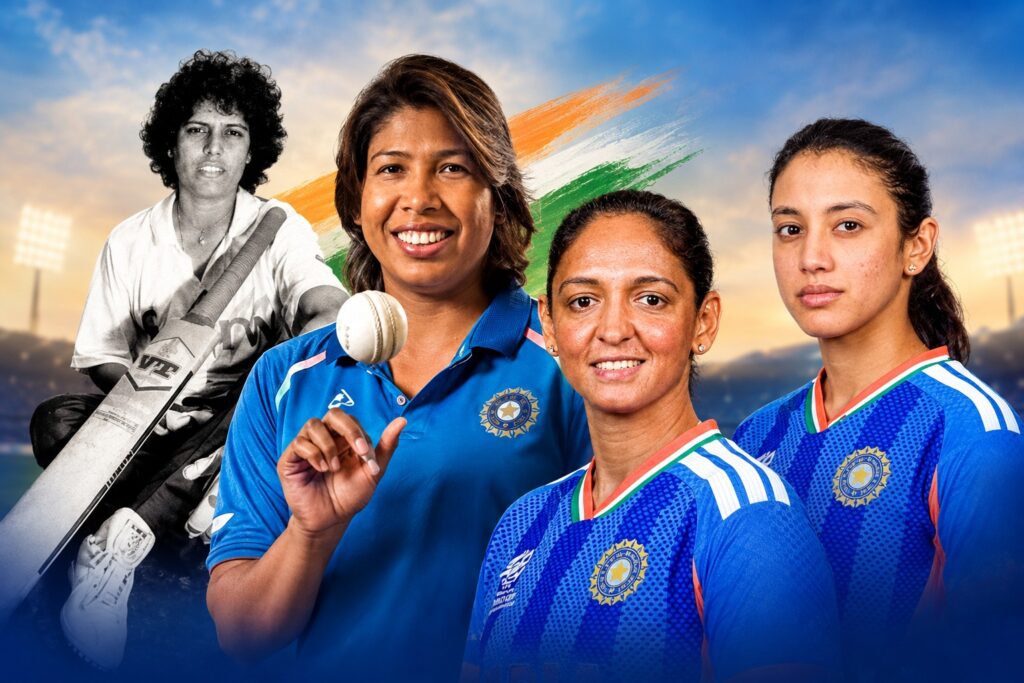
It’s kind of revolutionary to witness the phenomenal rise of Indian Women’s Cricket. By now the Indian women’s cricket must have been a talking point in most of the Indian homes. The nation that has been a men’s cricket enthusiast to the extent that the male cricketers are almost worshipped, is now accepting and even idolizing the women cricketers. Last year, that is, in 2025, the gutsy team made the entire nation proud with the historic World cup win. Even those who dismissed women cricket as just another symbolic sport, were now glued to their television sets. Harmanpreet, Smriti, Jemimah are becoming household names, gaining massive social media following and even entering hearts of fans.
How did Women Cricket start?
In 1934, the first women’s test was played between England and Australia at international level. In India, it was only in 1973 that the Women’s Cricket Association of India (WCAI) was formed. However, there were long pauses stretching up to many decades before the next concrete milestone was achieved in the Indian Women’s cricket. Indian women’s team played their first Test match against the West Indies in 1976 under the captaincy of Shantha Rangaswamy. 1978 was an instrumental year as the Indian ladies signed up for the ODI world cup. However, it was only during the next world cup in 1982 that they could win a match. Lacking consistency after a long hiatus, it was in 2005 world cup that India played in a final for the very first time, losing to Australia. In 2006, the Women’s Cricket Association of India (WCAI) was merged with the Board of Control for Cricket in India (BCCI) as a part of the International Cricket Council’s initiative to develop women’s cricket.
Meanwhile, their men counterparts had already achieved the cult status. With huge emotional and financial support from the authorities and the entire country, Indian men’s team consistently performed well, churning superstars like Sunil Gavaskar, Kapil Dev in 1980-90, Mahendra Singh Dhoni, Virat Kohli, Rohit Sharma ruling the charts and hearts of each proud Indian during 2000s.
Who were the icons responsible for laying the foundation of Indian Women’s cricket team?
If you have been a cricket afficionado, you would have definitely heard about Diana Edulji, a legend who broke stereotypes to lay the foundation of Indian women’s cricket.
Edulji made her debut in international cricket in 1976. It was definitely not easy playing cricket for a woman in the last century. Edulji braved the orthodox mindsets and paved way for the women cricket in India. It was Edulji who requested for a job in Railways and now she had a stable financial stream to support her dream of playing for the Indian Cricket team. Due to Edulji’s consistent efforts, Railways turned out to be one of the biggest supporters of women cricket in India. Railways organized a tournament in 1984 inviting more cricketers.
Jhulan Goswami, Mithali Raj, Anjum Chopra – the iconic names of Indian women cricket – and the latest cricketing sensations, Harmanpreet Kaur and Smriti Mandhana all have Railways tag. Harmanpreet joined Western Railway as Chief Office Superintendent in Mumbai in 2014. Sneh Rana, Pratika Rawal and Renuka Singh Thakur serve the Railways apart from bringing laurels for India.
While T20 had arrived onto the cricket landscape, it was in 2009 that women’s cricket adopted the format giving the audience a faster, gripping experience. The inaugural edition of the ICC Women’s T20 World Cup was held in England at the same time as the men’s tournament. However the actual breakthrough came in 2018, when the women T20 world cup was organized independently. Couple of years later, the Indian women cricket team stood the runners up while the host team Australia were crowned the champions.
Now the stadia for women matches were filling fast and TV viewership was constantly increasing.
The Record Girl – Smriti Mandhana
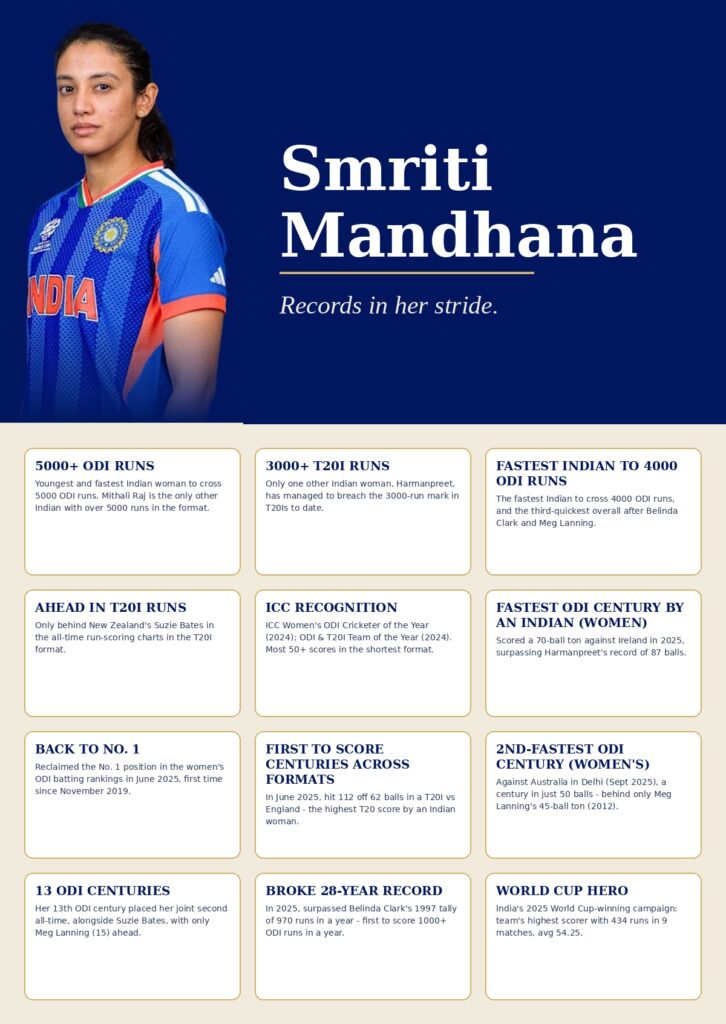
The darling of cricket fans, Smriti broke into the domestic circuit as early as when she was 9 years old. At the age of 11, she was already a part of Maharashtra U-19. At 16, she made her international debut in a T20 match at Vadodara. Just five days later, Smriti made her ODI debut and played remarkable innings. Hitting her maiden international century against Australia, Smriti was selected in the ICC Women’s Team of the Year for that season. Since 2018, Smriti began adding the highs to her talent table. She was the highest run-getter in women’s ODIs and was also a star performer in India’s run to the semi-finals of the ICC Women’s World T20 tournament. She won the ICC Women’s Cricketer of the Year as well as the ICC Women’s ODI Player of the Year for 2018.
Her record spell continued as in February 2019, Smriti became the world No. 1 batter in ICC women’s ODI rankings. She constantly breaks or makes a record. In 2023, when Women Premiere league was announced, Smriti emerged as the highest-priced player at INR 3.4 crores. She seems to be at her career best now and smashing one record after another.
The leader of Grit and Grace – Harmanpreet Kaur
It would be no exaggeration to say that Harmanpreet’s 171 not out against Australia in the World cup semi-final 2017 laid the foundation of the fierce and fearless innings that Indian Women Cricketers play today. Hailing from Moga in Punjab, Harmanpreet moved to Mumbai to hone her cricketing skills. A batting all-rounder now, she is deeply inspired by the legendary Virender Sehwag. When Mithali Raj retired, it was Harmanpreet who was given captaincy for both formats. This month itself, she created history, becoming the first cricketer, male or female, to captain in 150 T20I matches. Known for her aggressive style but maintaining composure when pressure builds up, she has led from the front with her tactical moves.
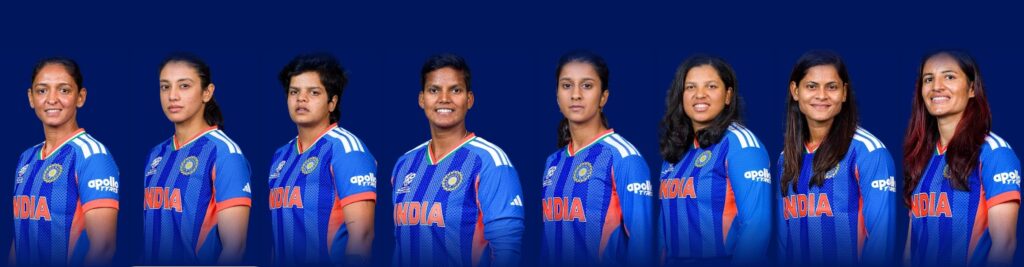
Under the captaincy of Harmanpreet, India won their maiden world cup in 2025, beating Australia by 52 runs. Shafali Verma and Deeptu Sharma emerged as the stars of the final. However, the entire team played brilliantly well through the series to lift not just the cup but the spirit of an entire generation with cricket establishing itself as the number one choice for sports amongst young girls.
Both the leading ladies, Harmanpreet as well as Smriti are running high on endorsements and so are the other players of the current team. The captain serves as brand ambassador for several major organizations, including Punjab National Bank, Omaxe, Shyam Steel, Crex, and Usha. Smriti is the brand ambassador for ONE8 (co-owned by Virat Kohli and operated by Agilitas), formerly Nike, and Wrangler, PNB MetLife, State Bank of India (SBI), Mastercard, Equitas Small Finance Bank, Hyundai India and Gulf Oil Lubricants, RedBull, Herbalife India, Rexona, Pee Safe and Candere (by Kalyan Jewellers).
The brands are recognising the grit, hard work and authenticity of these icons, some of whom have emerged from extremely humblke backgrounds and mostly from tier-3 and tier-4 cities. While we have all seen men cricketers ruling our TV screens for many decades, it seems like women cricketers have arrived with a bang now.
According to a BBC study, women participation has doubled in 14 states surveyed. There were six per cent of women playing cricket in 2020 while 16 per cent of women in the age group 15-24 now play cricket. Cricket is now the most played sport amongst women surpassing Kabaddi. Years of never-say-die spirit and consistent hard work is finally bearing fruit. The future looks splendid. Indian Women have caught Cricket as a career and with tremendous support, future looks splendid. y