Mother Dairy’s Tribute to Mother Nature: Brands Need to Rethink Packaging

Let’s Reset the System: Make Weddings Meaningful
May 31, 2026
Grovy India Reports 74% Growth in PAT in Q1 FY27
July 27, 2026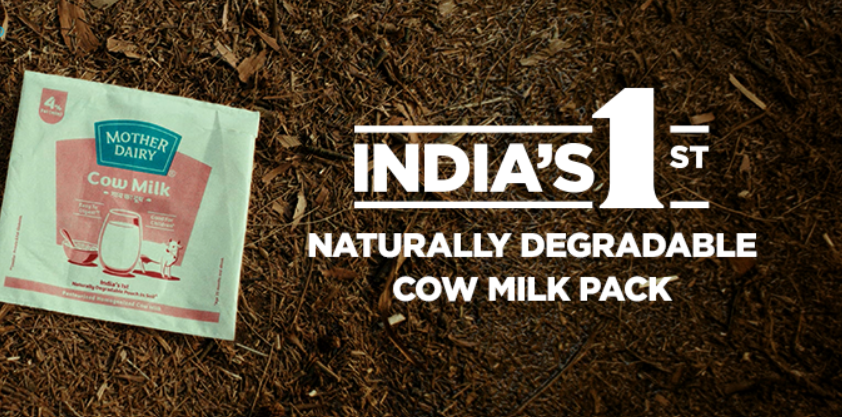
There are things we rarely question in our daily lives. Everyday essentials and their packaging. Milk packets are one of them.
They arrive at our doorstep every morning, quietly serve their purpose and disappear just as quickly into the bin. It feels harmless. Routine. Almost invisible.
But when you zoom out and look at the scale of this simple habit, the story changes.
Millions of milk pouches are used across India every single day. That convenience—so deeply woven into urban and semi-urban life—comes with a hidden cost we don’t often pause to think about: what happens to all that plastic after the milk is gone?
The invisible afterlife of convenience
For most of us, a milk packet lasts minutes in our hands. But in the environment, it can last decades.
Even when waste systems function, not all plastic is effectively recycled. A significant portion ends up in landfills, or worse, escapes into soil and water systems. Over time, this creates a slow, accumulating burden—one that doesn’t announce itself loudly, but grows steadily in the background of modern life.
This is the uncomfortable truth of everyday convenience: the impact is rarely immediate, but it is always cumulative.
A small shift that signals a larger rethink
Against this backdrop, Mother Dairy has introduced something that, at first glance, looks simple—a new cow milk pouch designed to naturally degrade after disposal.
But the significance is not in the packaging alone. It is in the intent behind it.
The idea is straightforward: a pouch that performs its job during use, and then does not linger in the environment long after its purpose is served.
Instead of remaining as persistent plastic waste, the material is designed to break down through natural processes, ultimately reducing its long-term footprint.
Why this matters more than it seems
It’s easy to dismiss such innovations as incremental. After all, it is “just packaging.”
But in reality, packaging is where sustainability either succeeds or fails at scale.
Milk is not a niche product. It is a daily essential in millions of homes. Even small improvements in how it is packaged, when multiplied across cities, states, and years, can create meaningful environmental shifts.
This is where the conversation moves beyond technology and into mindset.
Because the real question is not whether we can make a better milk pouch.
It is why we are only beginning to ask that question now.
The quiet transition happening in FMCG
For decades, the focus in fast-moving consumer goods has been efficiency—how to package more, distribute faster, and reduce costs.
Now, another layer is being added: responsibility.
Companies are being pushed—by consumers, regulators, and environmental realities—to think beyond the point of sale. The lifecycle of a product is no longer ending when it reaches the customer. It extends into what happens after disposal.
And this shift is not optional anymore. It is becoming structural.
Beyond innovation: a change in thinking
What makes initiatives like this interesting is not just the material science behind them, but the direction they represent.
They suggest a future where everyday essentials are designed with a second question in mind:
Not just “Will this work for the consumer?”
But also “What will this become after the consumer is done?”
That second question changes everything.
A step not the destination
It is important not to overstate any single innovation. No pouch alone will solve the larger plastic challenge. Systems, behaviour, infrastructure, and policy all need to evolve together.
But progress often begins with imperfect steps that shift expectations.
And once expectations shift, industries rarely go back.
The real takeaway
We don’t often associate something as ordinary as a milk packet with innovation.
But maybe that’s exactly where innovation needs to start—not in extraordinary spaces, but in the ordinary routines that define everyday life.
Because if we can rethink something as basic as how milk is packaged, then we are also learning how to rethink consumption itself.
And that is where real change begins.