
Expert Decodes: How AI will Reshape the Workforce in 2026 and beyond?

Gurugram Gets a Luxury Upgrade with Signature Global–Tonino Lamborghini Residences
April 28, 2026
“Sustainability and everyday clothing can go hand in hand”: Kapil Bhatia, Founder & CEO of UNIREC
May 13, 2026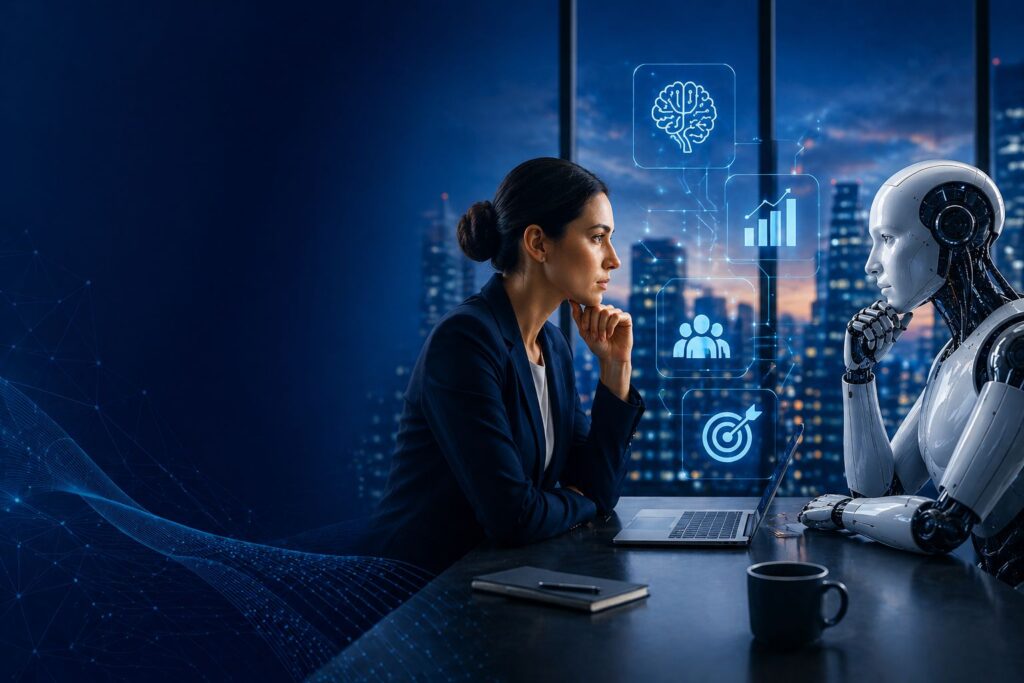
Will AI replace humans, or will humans adapt? This conversation has been prevalent in boardrooms, HR forums and leadership summits for the last few years. The real question is not survival. It is relevance.
We are well past the point of debating whether AI will reshape work. It already has. Today, 80% of employers confirm that AI tools are embedded in everyday tasks, with 83% reporting that, as a result, employees are working faster and more efficiently. Meanwhile, 92% of CHROs anticipate further AI integration into the workforce this year alone. These are not projections; they are the present tense.
And yet, something interesting is happening alongside this acceleration. The very traits that AI cannot replicate, judgment, empathy, contextual intuition and moral reasoning, are quietly becoming the most prized currencies in the talent marketplace. A striking 94% of employers say that human-centred skills including judgement, creativity, collaboration and problem-solving, will be highly valuable over the next three years. The irony is sharp – the more the AI does, more distinctly human the work becomes.
But let us not romanticise this too quickly!
The human-first approach as an organizational philosophy was never just about celebrating soft skills. It was a belief system rooted in the idea that people are the primary source of value, that their growth, well-being and voice matter beyond their output metrics. That belief is now under genuine structural pressure. Gartner predicts that through 2026, 20% of organizations will use Artificial Intelligence to flatten their structures, eliminating more than half of current middle-management positions. This is not a metaphor. The layers of human judgment that once mediated between strategy and execution are being automated away, quietly and efficiently.
What does this mean for talent strategy? It means the old playbook, hire well, develop consistently, retain through culture, needs a serious rethink. The question organizations need to ask is not “how do we use AI to make HR more efficient?” but rather “how do we redesign roles so that humans are doing work that genuinely demands human presence?
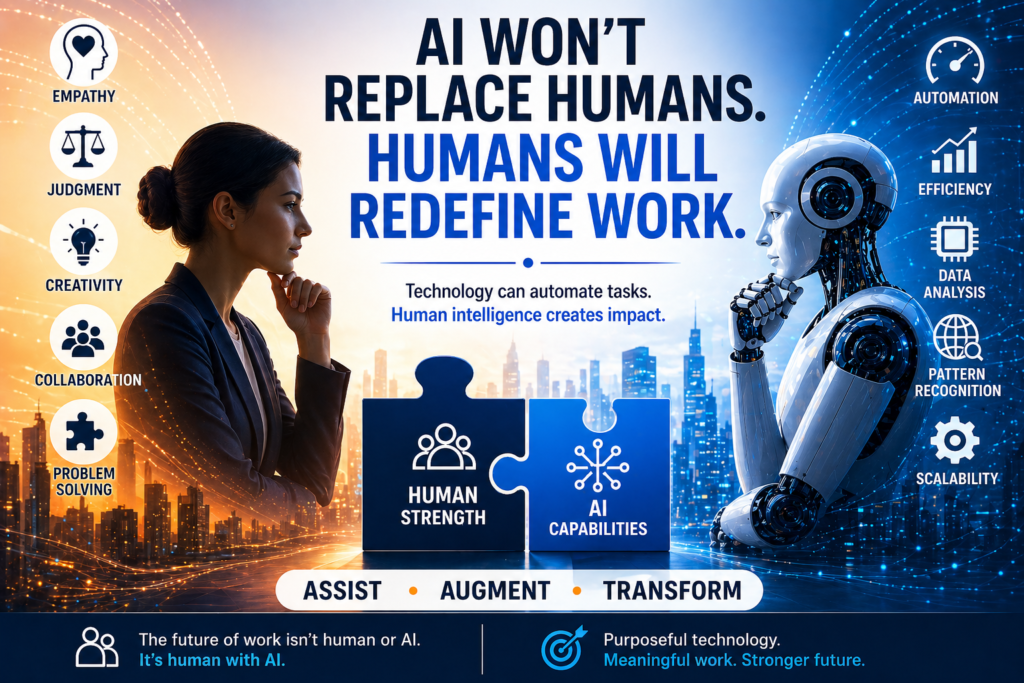
The organisations that will thrive aren’t those with the most sophisticated AI but those who understand how to implement the technology effectively, enabling it to assist, augment and transform human potential. That distinction – assist, augment, transform is worth sitting with. It implies intentionality, not just adoption. It implies design and not just deployment.
There is also the trust dimension, which tends to get buried under the productivity narrative. 61% of employees are worried about the ethical and safety risks of AI, including bias, misinformation, and lack of accountability, up 5% from last year. And 59% fear that AI will make jobs or skills obsolete faster than new opportunities are created. These are not anxious technophobes. These are informed professionals sensing correctly, that the transition is moving faster than the safety net around it.
Americans are already experiencing a steady decline in job quality — increased monitoring and surveillance, algorithmic scheduling and declining autonomy, all against the backdrop of stagnant wage growth. The human-first approach, if it is to mean anything in this environment, must actively resist this erosion. It must insist on meaningful work, not just managed work.
Here is where leaders in talent and people strategy have an unusual opportunity. The conversation around AI adoption has largely been driven by technologists and finance leaders, optimizing for cost and speed. The HR and people function, long accustomed to playing catch-up, now has something genuinely valuable to contribute – the language and architecture of human experience at work. The path forward demands both bold action and thoughtful leadership to realize the full promise of AI while safeguarding the irreplaceable role of human intelligence in the workplace.
The future of the human-first approach is not guaranteed, but it is eminently defensible. It will require organizations to move beyond performative declarations of “people are our greatest asset” and build structures, incentives, and investments that actually reflect that conviction. It will require leaders who can hold two truths simultaneously that AI is genuinely transformative and that transformation without humanity is just optimisation. The workplace of tomorrow will be shaped less by the tools we adopt and more by the questions we insist on asking. Prominent among them in automating this, what are we actually choosing? That question is profoundly human. And it will need profoundly human answers.
About the Author
Pranav Saxena is a People Strategy Partner and HR leader with over 18 years of experience across advertising, media and edtech. He is the Founder of The Curators, a talent consulting practice working with growth-stage organizations on strategic hiring, HR transformation, and culture building. A former Vice President – Talent at FCB India and senior HR leader at Publicis Groupe and Hero Vired, Pranav brings a rare combination of organizational depth and human intuition to every people challenge. Beyond the boardroom, he wears another hat entirely as a Radio Host on All India Radio, and storyteller under the creative identity The Soulful Mic. This blend of strategic rigour and creative empathy shapes how he thinks about talent, leadership and the evolving human-technology compact at work.