
Agriculture to Tech Culture: How Haryana is Emerging as India’s Next Artificial Intelligence (AI) Hub

TheBloodApp: How a Father–Daughter Duo is Solving Blood Donation Challenges
April 10, 2026
Why India Needs Climate-Resilient Roads and Highways That Can Withstand Extreme Weather
April 23, 2026
Recently, there was a proposal to establish the Haryana AI Mission aimed at accelerating the adoption of Artificial Intelligence across the state. The initiative has received support from the World Bank, with estimated assistance of around ₹470 crore.
As part of this mission, dedicated AI hubs will be set up in Gurugram and Panchkula. These centres will serve as innovation and training hubs, equipping nearly 50,000 youth with skills in emerging technologies. The initiative is expected to boost employability, foster innovation, and position Haryana as a key player in the AI-driven economy.
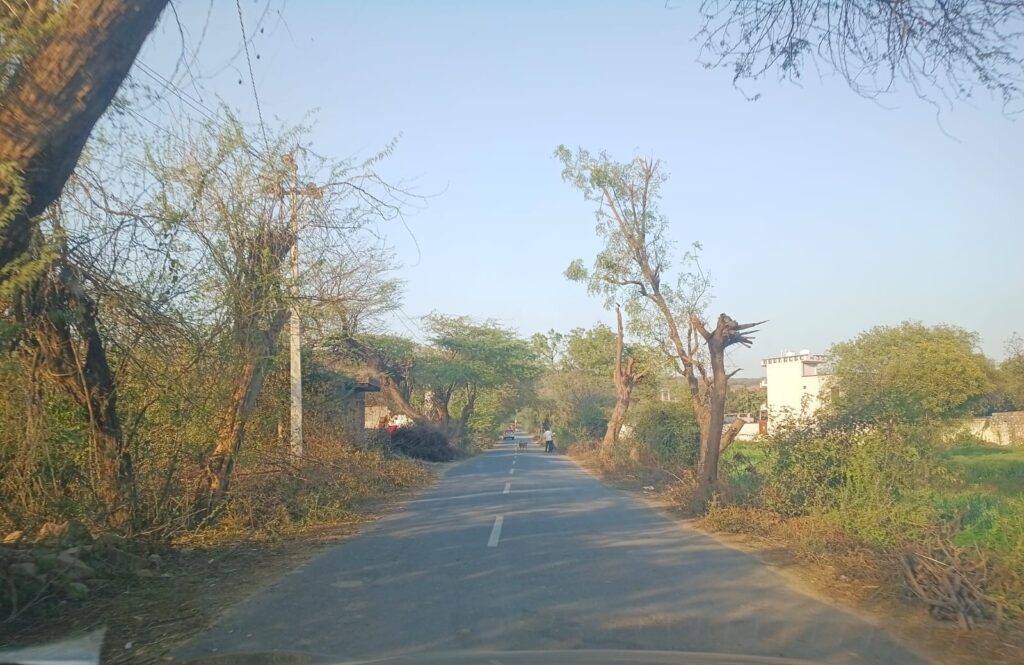
Haryana emerged as a state in 1966. Primarily an agrarian state, Haryana witnessed a significant transformation in the post-liberalization era of the 1990s. Regions in close proximity to Delhi, particularly Gurugram, began to experience rapid exponential urban growth, driven by industrialization, real estate expansion, and the influx of multinational corporations. According to a Times of India report (2003), the growth rate of 5.1 per cent in the GSDP of the state in real terms during 2001-02 was mainly due to the good performance of trade, transport and construction sectors. During the same year, the trade sector recorded a growth rate of 9.9 per cent, transport 11.4 per cent and construction 6.1 per cent. According to the Economic Survey of Haryana (2002-03), the overall growth rate in the agriculture sector during the year 2001-02 was just 0.4 per cent.
Loraine Kennedy, CNRS Research Director at School for Advanced Studies in the Social Sciences, mentions in his research paper that by early 2010, 45 SEZs in Haryana had received “formal” approval; another 17 had been approved “in principle.” As of February 2010, all of the state’s 32 “notified” SEZs were located in the NCR, and 26 of these were concentrated in Gurgaon District, adjacent to Delhi’s southern border. This area has experienced very rapid urban development since the 1990s, most notably in upscale residential and commercial properties. The growth of service-sector activities was particularly significant as Gurgaon was consistently ranked as one of the country’s leading hubs for Business Process Outsourcing (BPO) and other IT-enabled services (ITES).
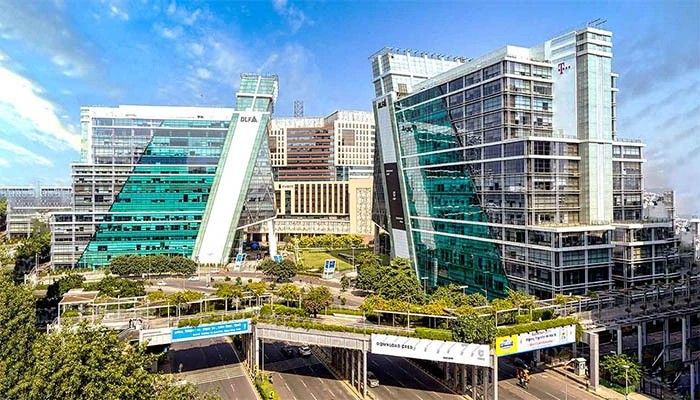
Home to leading corporate IT giants like Microsoft, Google, LinkedIn, WPP, Gurgaon is now on the path to becoming an AI hub along with Panchkula.
Panchkula as the Silicon Valley of India
The goal is to develop Panchkula as the ‘Silicon Valley of North India and to establish it as vibrant center of deep tech innovation. Panchkula will be developed as an AI hub on 73 acres of land with a clean environment, skilled human resources, high-speed internet and 24X7 green energy.
Artificial intelligence is being applied in every sector now. It has become an integral part of healthcare, education, agriculture, industry and governance systems. The Chief Minster of Haryana mentioned that the government is ensuring balanced regional development so that no area of Haryana is left behind.
Artificial Intelligence (AI) is transforming multiple sectors by improving accuracy, efficiency, and access to opportunities. In healthcare, AI is enabling more precise disease diagnosis and effective treatment planning. In education, it is strengthening personalised learning by adapting content to individual student needs. In agriculture, AI is empowering farmers to increase productivity, access better markets, and enhance value creation. Additionally, small and medium enterprises are leveraging AI to improve operational efficiency and gain a competitive edge in global markets.
Haryana: A quantum-ready state
“Glocal AI – Real Impact” is what Haryana is implementing as global thinking must be effectively aligned with local requirements. Recently, the Chief Minister of Haryana, Sh Nayab Singh Saini, highlighted the AI focus for the state. Data science departments in universities are being upgraded and advanced technologies like quantum computing are being included in curricula. These concrete steps are being taken to make Haryana a quantum-ready state.
Recognizing the critical role of GPU-intensive infrastructure in training advanced AI models, the state is moving to establish a dedicated data centre hub, with Ambala and Panchkula emerging as strategic choices for this ambitious push.
As per the Economic Survey 2025-26, the state’s annual per capita income has reached Rs 3,95,618 at current prices—up from Rs 3,58,171 in 2024-25, making the state, one of the best in ranks. While the figures look promising and as it makes equally promising strides with AI, has the state overcome the social inequality and gender biases, it has always been associated with? More on this in the next article in the series!