An Entrepreneurial Revolution – Lakhpati Didis

The Leading Lady of Sports – Smriti Mandhana
February 20, 2026
Plumbex India: Strengthening India’s Vision for Sustainable Water, Sanitation and Plumbing Innovation
February 23, 2026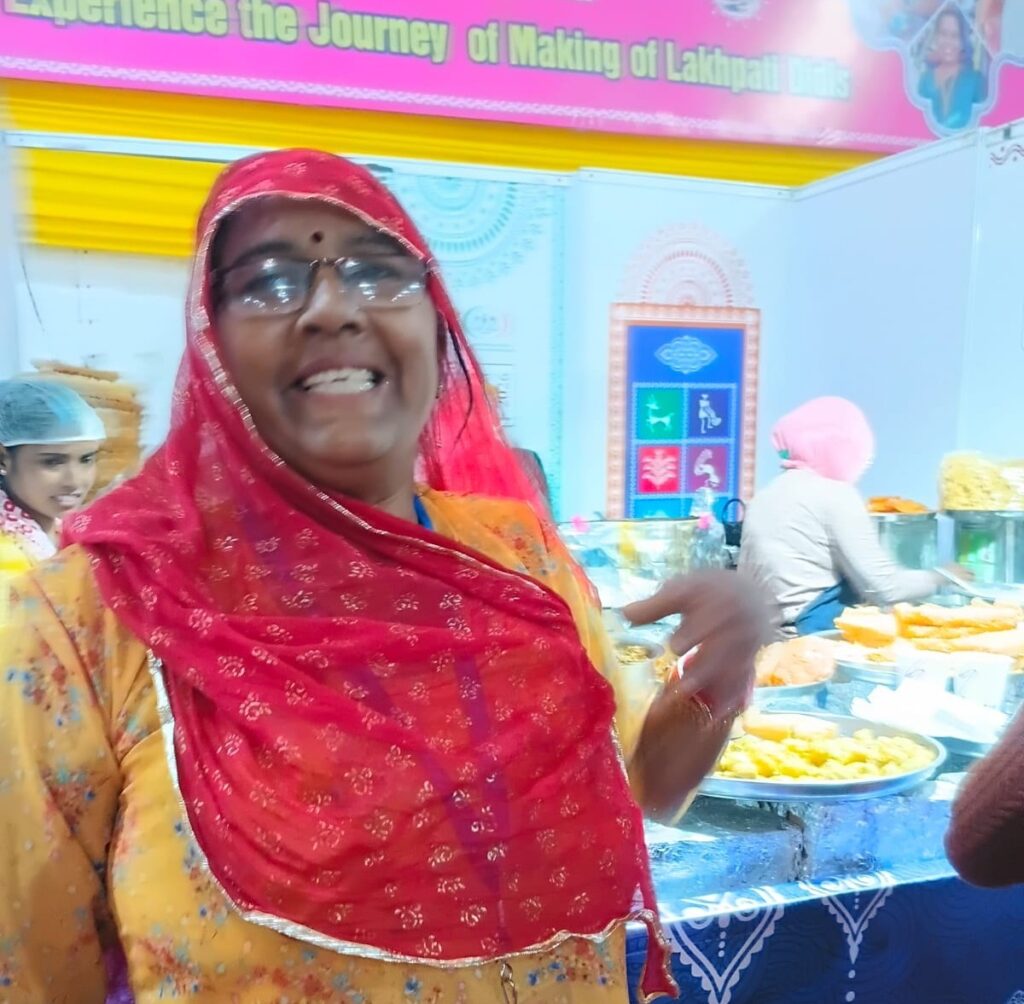
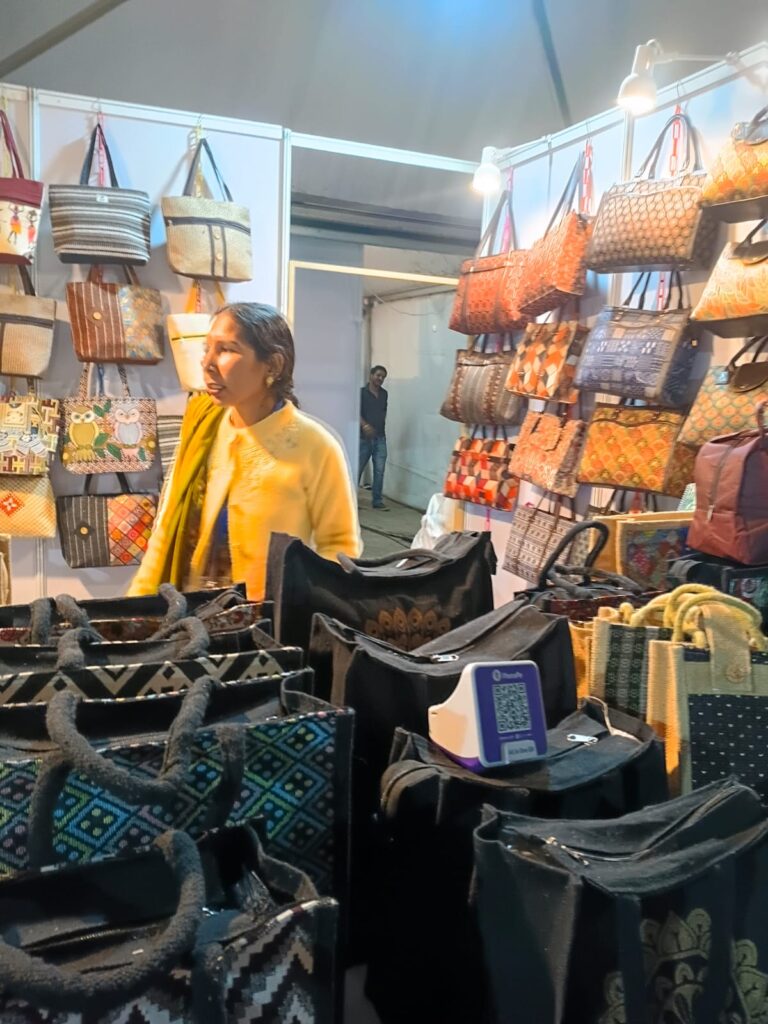
Pravesh is a humble woman, probably in her late 30s or early 40s and ‘manning’ her stall of stunning bags all alone. From Uncha Majra village in Pataudi Block of Gurgaon, she has brought forth a variety of adorable bags in every size which can easily be used in a formal setting. She has pursued stitching and bag repairing successfully establishing her work. Part of Saheli Self-help group, which is a grassroot, women-led initiatives in India focused on economic empowerment, skill training, and social welfare, Param gradually improved her financial condition, with the guidance, support and hardwork.
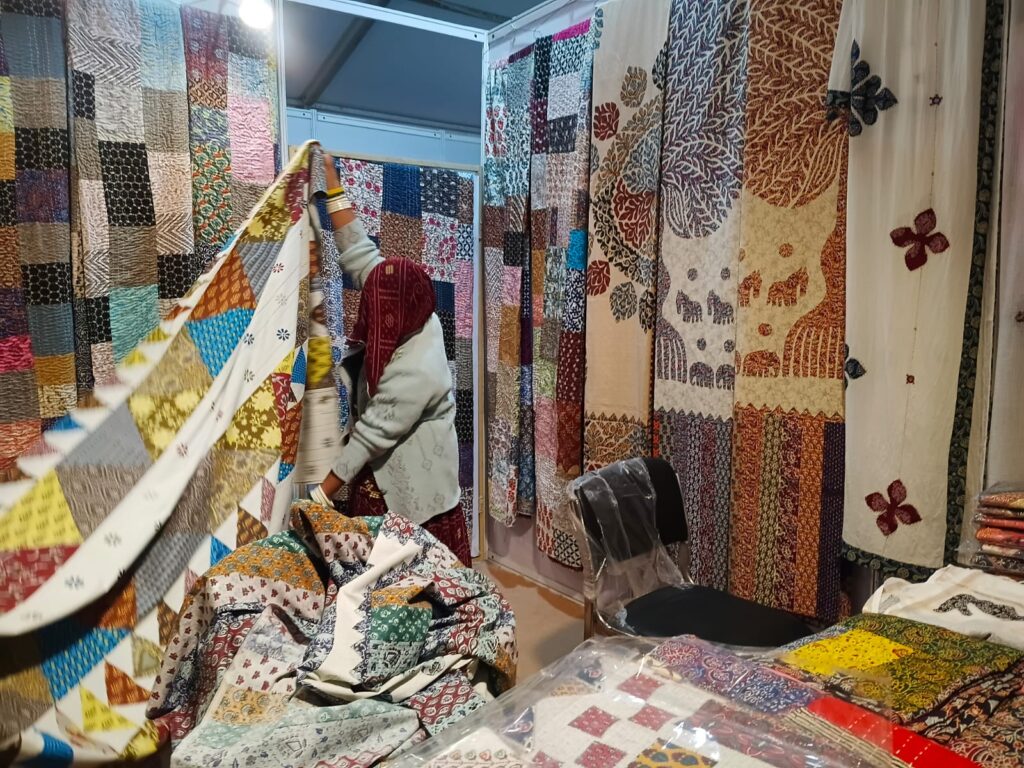
Dressed in a Rajasthani lehenga, Rajeevika from village Chak 2 AD of Poogal in Bikaner, was being helped by her father-in-law at her stall of vibrant Bikaner handlooms showcasing a rich blend of tradition and utility. Her stall features bedsheets, cushion covers, quilts etc with each piece handwoven by skilled artisans, reflecting district’s vibrant colors and intricate designs.
Similarly, Poonam from district Nagore in Rajasthan has set up her stall of Mouth-watering and colorful Rajasthani delicasies – Choorma Laddoos, Mirchi Pakoras, Pyaz Kachori, Jalebis. The crowd is flocking to the counter and Poonam is visibly happy. This is her first stint at the National Saras Aajeevika Mela, which is being held currently held at Gurgaon from 10th February to 26th February.
The air is thick with colour, craft and vibrancy. More than 900 women entrepreneurs from 28 states have gathered, with each stall a window into a different corner of India.
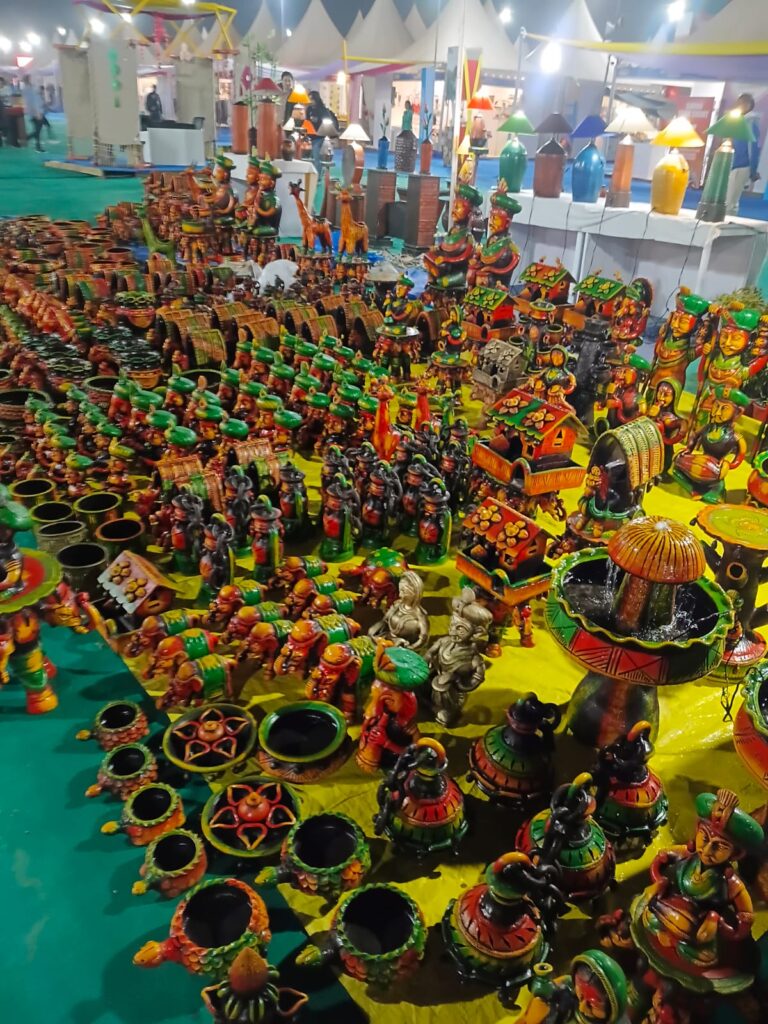
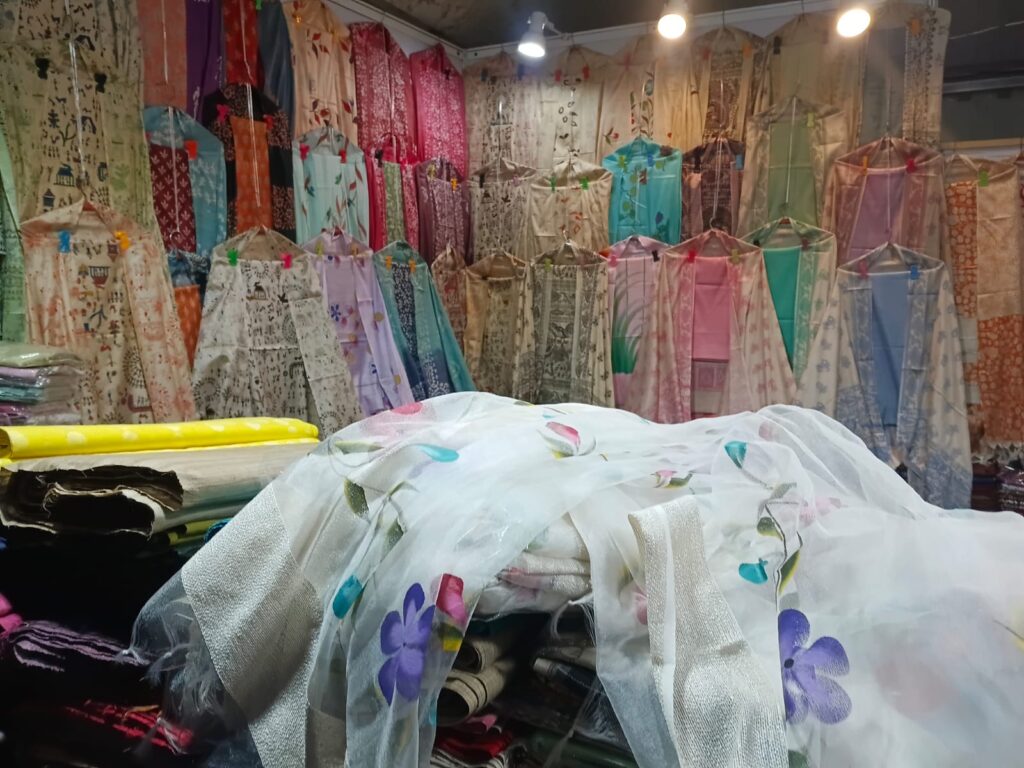
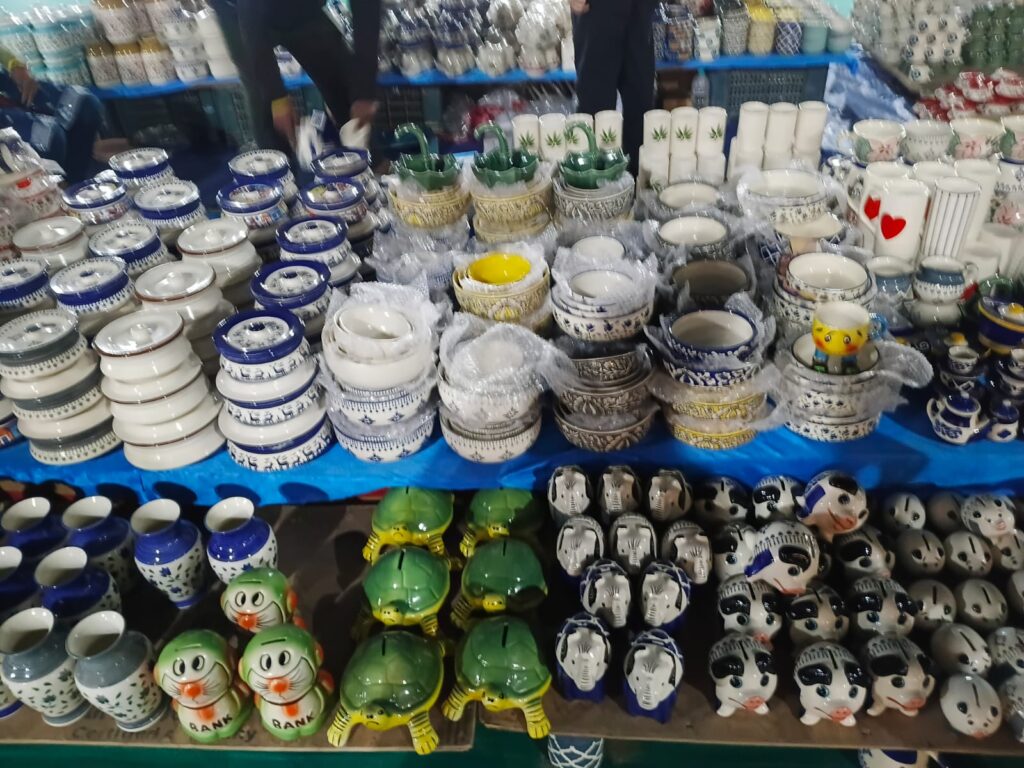
With over 450 stalls lining the venue, the fair unfolds like a living atlas of regional enterprise. The soft elegance of Kashmir’s Pashmina shares space with the luminous silks of Tamil Nadu. Rajasthan’s intricate embroidery competes for attention with Assam’s finely crafted bamboo products. Visitors often describe it as a “Mini India” — not merely for its diversity, but for the sense of unity stitched through every display.
From Self-Help to Self-Reliance
The women at the fair are affiliated with Self-Help Groups (SHGs), the backbone of rural women’s collective enterprise in India. Under the Deendayal Antyodaya Yojana – National Rural Livelihood Mission (DAY-NRLM), nearly 10 crore women have been mobilised into SHGs across the country. Their journey from small savings collectives to structured micro-enterprises is reshaping rural economies at scale.
Union Rural Development Minister Shivraj Singh Chouhan announced that the Centre would strive to achieve the target of creating six crore ‘Lakhpati Didis’ under the rural livelihoods mission by 2029-30.
He said the previous target set by PM Modi to create three crore ‘Lakhpati Didis’ by end of 2027 was achieved by 2025 with the contribution of rural development ministry’s team, bankers and also state governments.
Chouhan was speaking during the Central Level Coordination Commitee (CLCC) Meeting and the National Launch event under DAY-NRLM (Deendayal Antyodaya Yojana – National Rural Livelihoods Mission here.
The Union Minister underlined that achieving the ambitious goal of 6 crore ‘Lakhpati Didis’ would require connecting at least 10 crore women to the various financial inclusion initiatives of the Ministry of Rural Development. The transformation is not just financial; it is social and psychological. Women who once hesitated to step into public spaces are now negotiating prices, exploring export opportunities and discussing branding strategies with confidence.
Learning Beyond the Loom
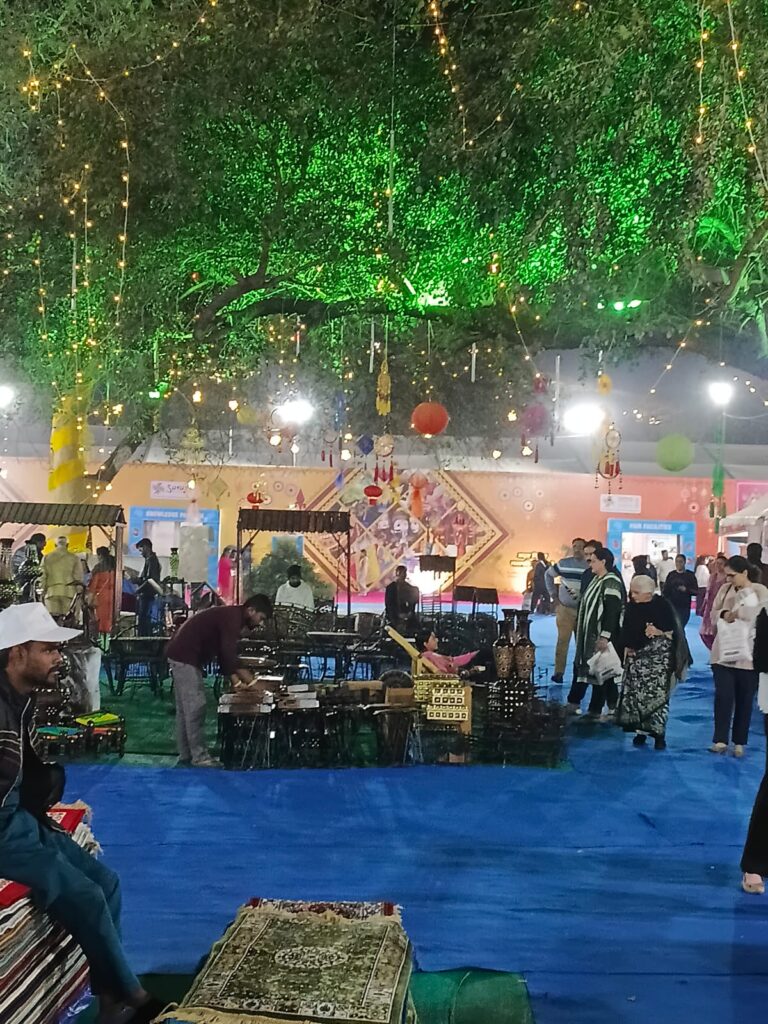
A distinctive feature of the fair is the Knowledge Pavilion — a dedicated space where business fundamentals meet grassroots entrepreneurship. Daily workshops focus on packaging innovation, brand positioning, business proposal preparation and social media marketing.
For many participants, these sessions are as valuable as the sales themselves. “We know how to make quality products,” one entrepreneur says, “but now we are learning how to tell our story.” In today’s digital economy, storytelling is as critical as skill — and the fair recognises that gap.
Special sessions on logistics and transport further expand horizons. By understanding supply chains and distribution networks, rural producers are being equipped to scale beyond local mandis and urban exhibitions, tapping into national and even global markets.
The Discipline Behind the Dream
What makes the SHG model particularly compelling is its financial credibility. Non-Performing Assets (NPAs) among these groups remain below 2 percent — a figure that signals strong credit discipline and responsible repayment behaviour. This track record has strengthened institutional trust and opened doors to formal banking channels for millions of rural women.
It also challenges outdated perceptions about risk in grassroots lending.
A Shift in the Development Narrative
The fair captures a larger shift in India’s development discourse — from welfare-driven participation to women-led growth. These entrepreneurs are not beneficiaries; they are business owners, brand-builders and job creators within their communities.
As visitors move from stall to stall, sampling regional flavours and admiring handcrafted detail, what becomes clear is that the story unfolding here is not confined to the exhibition hall. It is a story of networks built through trust, savings transformed into capital, and skills honed into sustainable enterprises.
In every woven thread, embroidered motif and bamboo carving lies a simple but powerful message: when women organise, economies rise with them.